Ștefan Odobleja
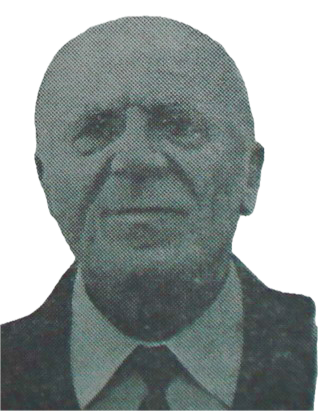
Estimated reading time: 4–5 minutes
“His was a silent apparition. Like a letter left in a bottle and cast into the ocean of the scientific world, at a time when nobody stayed to read the label.”
During the 1970s, between lectures and seminars, in the corner of the staff room or in the breaks between classes, the name of Ștefan Odobleja began to surface.
Not in the official syllabus, but in the conversations of certain professors.
They were among those who had not given up the habit of thinking aloud.
There was talk of a work that had appeared decades earlier, in France.
It had been written by a military doctor from Lugoj. The title — Consonantist Psychology.
The volume — massive, nearly nine hundred pages. Published in two tomes, in 1938 and 1939, in Paris.
The contents — unexpectedly modern: ideas about regulation, circular causality, inverse reaction… In short, feedback. But expressed differently. Expressed earlier.
His word was “consonance” — a poetic choice.
It was undoubtedly an unusual one for a science that would not be born for another decade, under a different name: cybernetics.
When I understood what that book contained, I was struck by a feeling that is hard to describe.
It was a form of bitter solidarity mixed with indignation.
I felt wronged alongside him.
As though, without ever having known him, I had been part of the same team.
Someone, however, had stolen the goal we had scored ten years before the starting whistle.
At that time I believed, with absolute conviction, that Norbert Wiener had plagiarised him.
I believed he had seen the ideas, and having understood them, had repackaged them under the flag of MIT.
The fury was not rational, but it was sincere. And at that age, sincerity takes precedence over evidence.
All I knew for certain was that in 1937, Odobleja had printed a kind of announcement, a prospectus in French. He had distributed it at a medical congress. Then, in the following years, he had published the book, also in French, with a reputable publishing house in Paris.
His was a silent apparition. Like a letter left in a bottle and cast into the ocean of the scientific world, at a time when nobody stayed to read the label.
After the war, in 1948, Cybernetics appeared, under the academic signature of Norbert Wiener. Launched with aplomb, at MIT, in the English language, with immediate resonance. And in Romania, only in the 1960s did the questions begin.
It is said that in 1968, at an international specialist conference, a Romanian delegation raised the simple question for the first time: Who was, in fact, the first? The answer came slowly.
In 1978, in Amsterdam, before an audience of specialists in cybernetics and systems, what needed to be said was said at last: Odobleja had formulated the ideas earlier. His theory was there, complete, well-articulated — it had simply been ignored. Or, perhaps, merely lost in a different alphabet.
Later I understood that it had not been a matter of theft, but of an astonishing coincidence. When Norbert Wiener and his colleagues were only just sketching out the concepts of regulation and reaction, Odobleja had already noted them down, with painstaking care and a terminology of his own, in the French language.
The studies that appeared afterwards confirmed what at first had seemed merely a romantic theory: Ștefan Odobleja had formulated, independently and with priority, the fundamental ideas of cybernetics. Not in the form of a Western scientific manifesto, but with the modesty of a Romanian doctor who saw in human thought a regulable system.
Perhaps the world was not ready for him.
Perhaps a truth spoken too soon is easier to ignore than to understand.
But he wrote. Clearly. First.
And today, looking back, I know that he was among those who lit the torch, even if they left it in the hands of others.